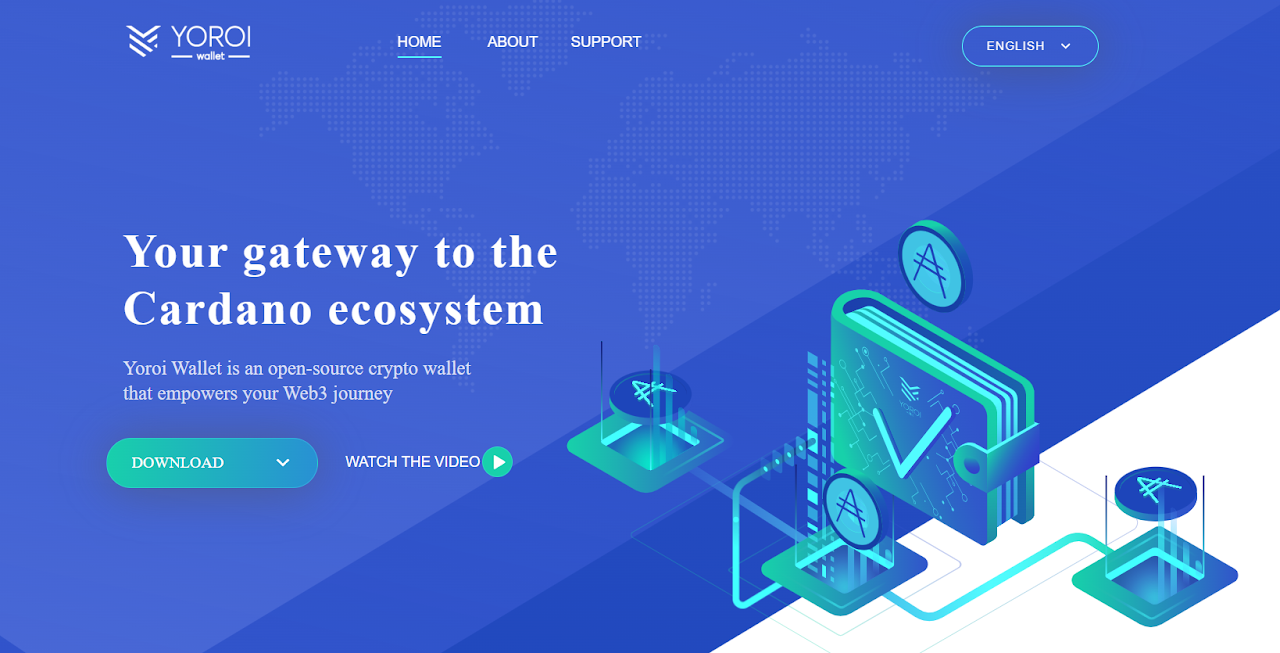
Yoroi Wallet: A Simple Guide to Managing Your Cardano Assets
Introduction to Yoroi Wallet
Managing cryptocurrency can feel complicated when you are new to blockchain technology. Yoroi Wallet was developed to offer Cardano users a convenient way to manage their digital assets through a lightweight wallet interface. Traditionally associated with the Cardano ecosystem, Yoroi has supported activities such as sending and receiving ADA, managing native tokens, exploring NFTs, and delegating ADA to stake pools.
However, there is an important current consideration: Yoroi's official website now states that the wallet is being wound down following a security incident. Users should review official announcements and migration guidance before creating a wallet or transferring funds. This makes understanding the wallet's features and security practices especially important.
What Is Yoroi Wallet?
Yoroi is a non-custodial cryptocurrency wallet originally developed by EMURGO, one of Cardano's founding entities. A non-custodial wallet gives users control over their wallet credentials and recovery phrase rather than relying on a traditional account provider to manage their assets.
Yoroi was designed as a light wallet, meaning it does not require users to download the entire Cardano blockchain. This approach helped make everyday wallet activities more accessible on supported mobile devices and desktop browsers.
Historically, Yoroi has provided tools for managing ADA and compatible Cardano-native assets. Its features have also included staking delegation, NFT management, and connections to supported decentralized applications.
Key Features of Yoroi Wallet
1. Lightweight and Convenient Access
One of Yoroi's original advantages was its lightweight design. Instead of downloading the complete blockchain, users could access wallet information through connected infrastructure. This made routine wallet activities more convenient for people who preferred not to manage a full blockchain node.
2. ADA Transactions
Yoroi has supported sending and receiving Cardano's native cryptocurrency, ADA. Users could generate a receiving address, share it with a sender, or enter a recipient's address when preparing a transaction.
As with any cryptocurrency transfer, checking the destination address and network details carefully is essential because blockchain transactions are generally irreversible.
3. Staking Delegation
Cardano uses a proof-of-stake system. Yoroi historically allowed ADA holders to delegate their stake to a stake pool, helping participate in the network's staking process without operating their own pool.
Delegation rewards are not guaranteed. They can vary according to network conditions and pool performance, and users should understand the applicable risks before participating.
4. Support for Digital Assets
Yoroi has offered functionality for managing supported Cardano-native tokens and NFTs. These capabilities gave users a way to organize eligible digital assets within a single wallet interface instead of relying on several separate applications.
5. Open-Source Transparency
Yoroi has been presented as an open-source project, allowing its code to be examined publicly. Open-source development can support transparency, although it does not guarantee that software is completely secure or free from vulnerabilities.
Advantages of Yoroi Wallet
Here are some of the benefits that historically made Yoroi appealing to Cardano users:
Simple interface: Its design aimed to make common wallet activities easier to understand.
Lightweight operation: Users did not need to download the entire Cardano blockchain.
Self-custody: Users controlled their wallet credentials and recovery information.
ADA management: Sending and receiving ADA were central wallet functions.
Staking support: Delegation tools allowed eligible users to participate in Cardano staking.
Digital asset management: Supported tokens and NFTs could be managed through the wallet.
Open-source approach: Publicly available code supported community inspection.
These advantages describe Yoroi's historical functionality, not a guarantee of ongoing service availability. Its announced wind-down means users should verify current support before relying on these features.
Important Security Tips for Yoroi Users
Security should always come first when handling cryptocurrency. Never share your wallet's recovery phrase, private keys, or spending password with another person or website. Anyone who obtains the necessary recovery credentials may be able to control the associated assets.
If you already use Yoroi, consult official announcements for instructions about protecting or migrating your assets. Access official information through a trusted source, verify destination wallet addresses independently, and avoid unsolicited messages promising urgent recovery assistance.
Do not install unfamiliar wallet extensions or enter recovery information into websites advertised through suspicious links. Before migrating assets, independently verify the destination wallet's authenticity and compatibility.
Conclusion
Yoroi Wallet has played a notable role in helping Cardano users manage ADA and explore blockchain features through a lightweight interface. Its historical benefits included convenient transactions, staking delegation, digital asset management, and open-source transparency.
Nevertheless, the announced wind-down following a security incident changes how users should approach the wallet today. Review official guidance, protect your recovery information, and carefully verify any migration process before moving funds. In cryptocurrency, informed decisions and strong security habits are just as important as convenient wallet features.